Turkey TailBig Ideas, Real Impact.
Trametes versicolor
What is being Studied
Current research interest in Turkey Tail includes:
Polysaccharopeptides and polysaccharides, including PSK and PSP
Immune-related research pathways in non-clinical and clinical-adjunct contexts
Interactions between polysaccharides and gut-associated immune signaling
Variability in compound presence based on substrate, strain, and preparation method
Much of the existing literature focuses on specific, standardized preparations, and findings should be interpreted within those methodological constraints.
Why Preparation Matters
Turkey Tail is a tough, fibrous mushroom that is not typically consumed whole. Preparation method plays a critical role in determining which compounds are extracted and preserved.
Water extraction parameters—such as temperature, duration, and filtration—have a significant impact on polysaccharide yield and composition. Inconsistent or poorly documented extraction methods can result in materials that differ substantially from those described in research literature.
For this reason, MMI emphasizes careful documentation and repeatability when studying Turkey Tail preparations.
Research Context & Limitations
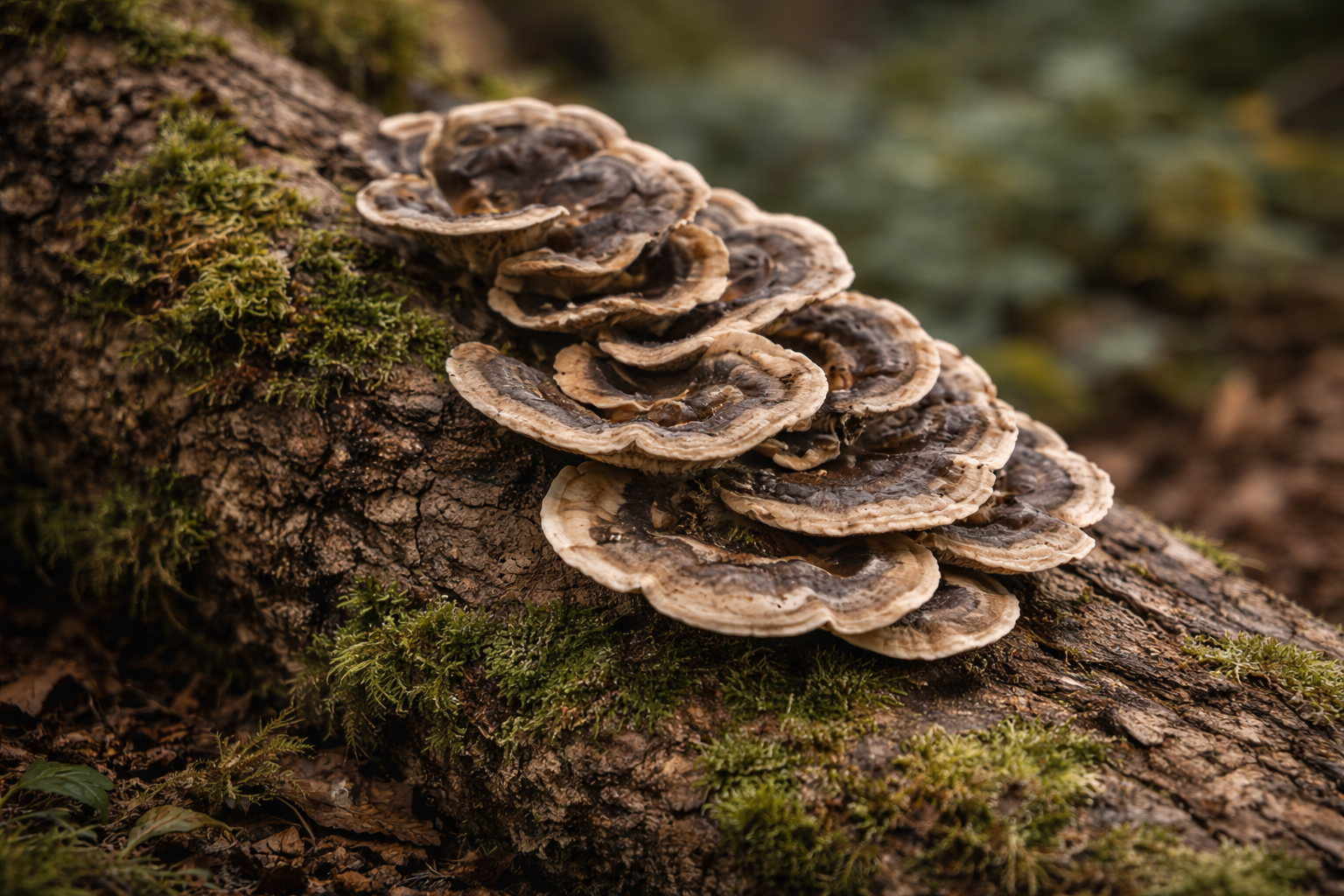
Turkey Tail (Trametes versicolor) is a widely distributed polypore mushroom recognized by its distinctive banded appearance. It has a long history of traditional use and is one of the most extensively studied medicinal mushrooms in modern research, particularly in relation to its polysaccharide content.
At Medicinal Mycology Institute, Turkey Tail is studied as a biologically complex material whose composition and consistency are strongly influenced by cultivation, processing, and extraction methods.
Research & References
The following resources provide context for Turkey Tail research:
Peer-reviewed studies indexed on PubMed
Reviews examining polysaccharopeptides and immune-related pathways
Literature on PSK and PSP preparation standards
Comparative analyses of extraction methods
References are provided for educational purposes and to encourage careful, independent review.
MMI Notes
Review of available research and observational work conducted by the Institute suggests that many commercial Turkey Tail products lack sufficient preparation detail to allow meaningful comparison with studied materials.
This reinforces the importance of documented methods, material transparency, and conservative interpretation of findings when discussing Turkey Tail.
MMI continues to study preparation variables to better understand their impact on composition and consistency.
Related Institute Work
Standards & Methods
Research & Documentation
Supportive Access Programs
Turkey Tail illustrates how standardized preparation—not just species identification—plays a central role in interpreting medicinal mushroom research.
Turkey Tail occupies a unique position in medicinal mushroom research due to the existence of well-defined polysaccharide preparations studied in specific clinical-adjunct settings, particularly in Japan.
However, many commercially available products do not resemble the materials used in these studies. Differences in species verification, cultivation environment, extraction method, and standardization make direct comparison difficult.
Understanding this gap between research materials and commercial preparations is essential when interpreting findings or evaluating claims.
Fruiting Body, Mycelium, and Standardization
Research literature on Turkey Tail often specifies preparation methods and material sources. Fruiting body–based preparations, mycelium-derived materials, and fermentation products are biologically distinct and should not be assumed to produce equivalent results.
MMI places particular emphasis on clarity around material origin and preparation, as these variables strongly influence reproducibility and interpretation.
Overview