ReishiBig Ideas, Real Impact.
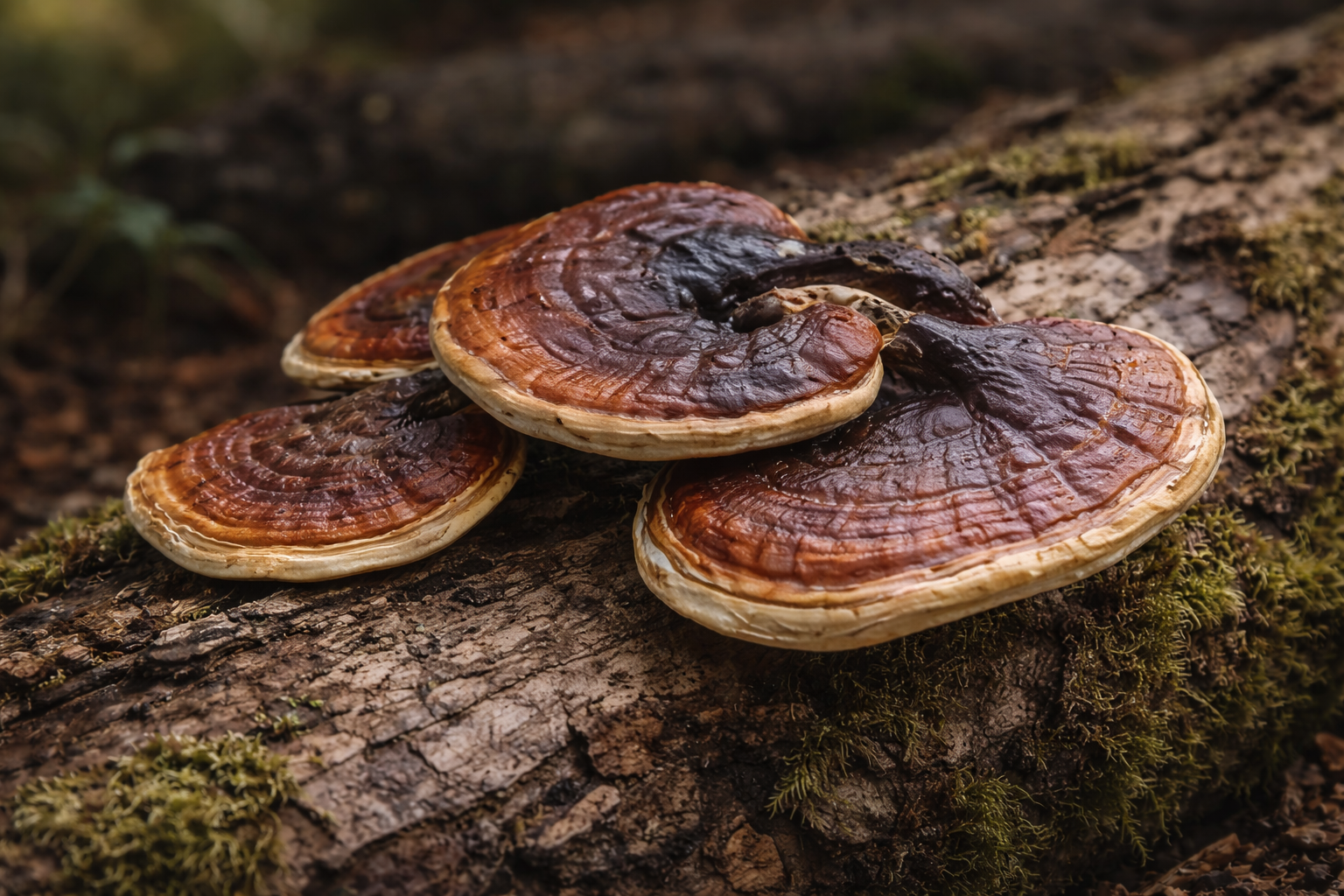
Ganoderma lucidum (and related Ganoderma species)
What is being Studied
Current areas of research interest related to Reishi include:
Triterpenoid compounds and their structural diversity
Polysaccharides and immune-related research pathways
Stress-response and inflammation-related mechanisms in non-clinical models
Differences among Ganoderma species and strains
Variability introduced by extraction temperature, duration, and solvent choice
Research findings vary widely depending on material source and preparation, and conclusions should be interpreted within those constraints.
Why Preparation Matters
Reishi is a woody, lignified mushroom that is not typically consumed whole. As a result, preparation method plays an especially important role in determining what compounds are present in a finished extract.
Water extraction, temperature control, duration, and filtration significantly influence polysaccharide profiles, while other compounds may require different preparation approaches. Extended boiling, aggressive reduction, or poorly controlled drying can alter or degrade sensitive components.
For these reasons, MMI places particular emphasis on documented extraction parameters and repeatability when studying Reishi preparations.
Species & Material Considerations
Reishi (Ganoderma spp.) is one of the most historically documented medicinal mushrooms, with written use spanning centuries in East Asian traditions. In modern research, Reishi is studied primarily for its diverse triterpenes, polysaccharides, and other secondary compounds, as well as how preparation methods influence their presence and bioavailability.
At Medicinal Mycology Institute, Reishi is examined as a biologically complex material whose properties vary significantly depending on species, cultivation conditions, and extraction technique.
Research & References
The following resources provide context for ongoing Reishi research:
Peer-reviewed studies indexed on PubMed
Reviews examining triterpenes and polysaccharides
Comparative studies of Ganoderma species
Non-clinical models exploring immune and stress-related pathways
References are provided for educational purposes and to encourage careful, independent review of the literature.
MMI Notes
Review of existing research and observational work conducted by the Institute indicate that many commercially available Reishi preparations vary widely in composition and are often insufficiently described to allow meaningful comparison with published studies.
This reinforces the importance of species identification, material transparency, and preparation documentation when evaluating claims or outcomes related to Reishi.
MMI continues to document preparation variables and comparative approaches to improve clarity and reproducibility.
Related Institute Work
Standards & Methods
Research & Documentation
Supportive Access Programs
Reishi demonstrates how tradition, modern research, and preparation discipline must be considered together to avoid oversimplification. Reishi demonstrates how tradition, modern research, and preparation discipline must be considered together to avoid oversimplification.
The name “Reishi” is commonly used to describe several related Ganoderma species. While these species share some similarities, they are not chemically identical and should not be assumed to produce interchangeable results.
In addition, much of the historical and modern research literature specifies fruiting body material. Preparations derived from other sources may differ substantially from those described in published studies.
Understanding species identity and material origin is essential when interpreting both traditional references and contemporary research.
Overview