Lion’s ManeBig Ideas, Real Impact.
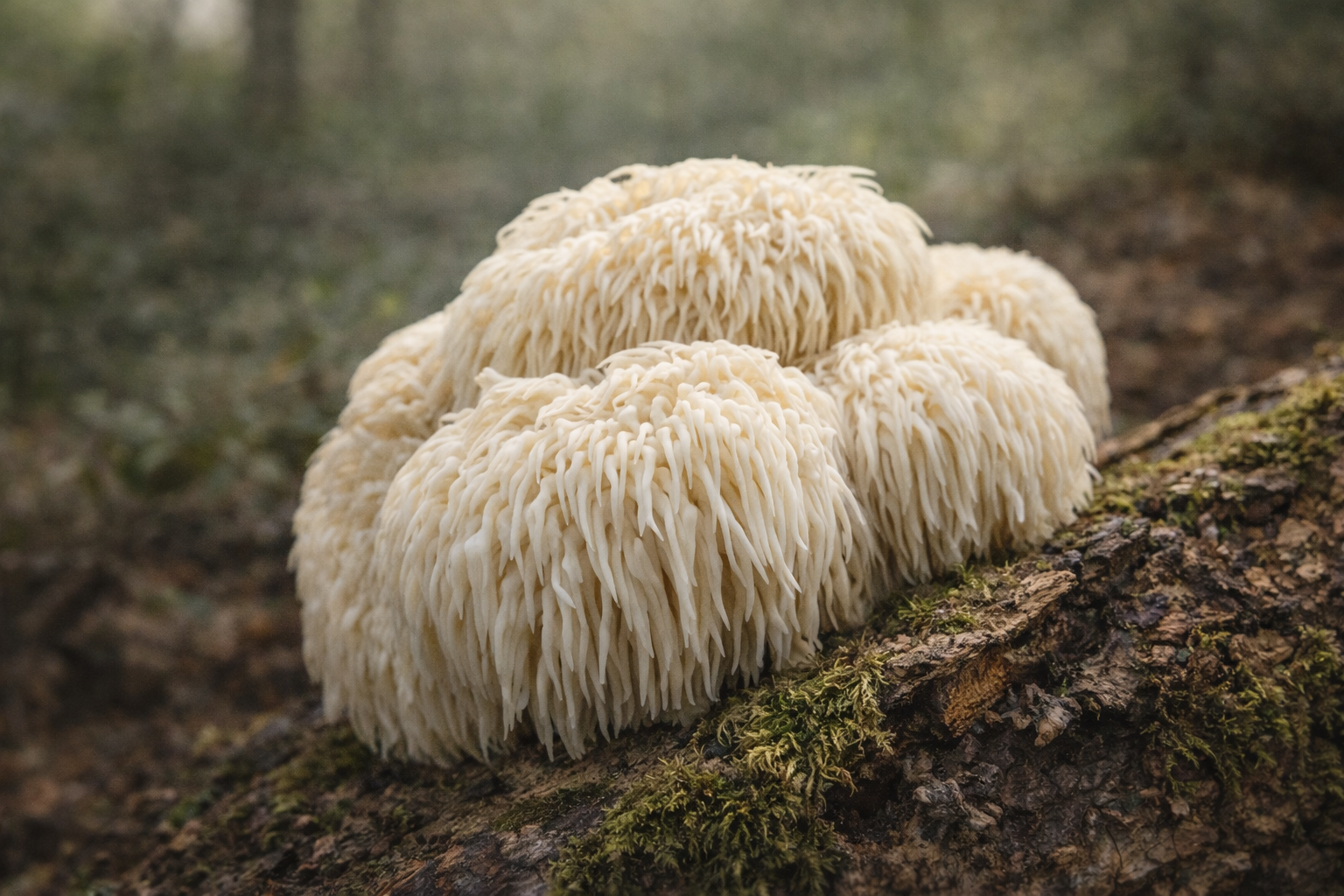
Hericium erinaceus
What is being Studied
Current research interest in Lion’s Mane includes:
Neurotrophic compounds such as hericenones and erinacines
Nerve growth factor (NGF)–related pathways
Cognitive and neurological function in non-clinical research settings
Differences in compound presence based on growth substrate and extraction method
Research in this area is ongoing and evolving. Findings vary widely depending on study design, material source, and preparation method.
Why Preparation Matters
How Lion’s Mane is cultivated and extracted has a significant impact on what compounds are present in the final material.
Differences between fruiting body and mycelium-based materials, as well as variations in extraction temperature, duration, and filtration, can result in preparations with substantially different chemical profiles. These differences are not always apparent from product labeling or marketing language.
For this reason, the Institute emphasizes preparation transparency and documented methods over broad or simplified claims.
Fruiting Body vs. Mycelium
Lion’s Mane (Hericium erinaceus) is a culinary and medicinal mushroom that has been used traditionally in East Asia and is now the subject of increasing scientific interest. Modern research focuses on its unique secondary compounds and the ways in which cultivation and preparation methods influence its chemical composition.
At Medicinal Mycology Institute, Lion’s Mane is studied not as a product, but as a biological material whose properties depend heavily on how it is grown, processed, and extracted.
Research & References
The following resources provide additional context and primary literature related to Lion’s Mane research:
Peer-reviewed studies indexed on PubMed
Review articles examining neurotrophic compounds
In vitro and animal studies exploring mechanism pathways
MMI does not selectively cite studies to support predetermined conclusions. References are provided for educational purposes and to encourage informed, independent review.
MMI Notes
Observational work and review conducted by the Institute suggest that commercially available Lion’s Mane preparations often differ substantially from the materials described in published research. This reinforces the importance of understanding sourcing, cultivation, and extraction practices when evaluating claims or outcomes.
The Institute continues to document preparation variables and their influence on consistency and reproducibility.
Related Institute Work
Standards & Methods
Research & Documentation
Supportive Access Programs
Lion’s Mane illustrates a broader principle central to medicinal mycology: how something is prepared often matters as much as what it is.
Much of the published research on Lion’s Mane involves fruiting body material, while many commercial preparations rely on mycelium grown on grain-based substrates. These approaches are biologically distinct and should not be assumed to be interchangeable.
Understanding what material is being studied—or consumed—is essential when interpreting research findings or evaluating commercial claims.
Overview