CordycepsBig Ideas, Real Impact.
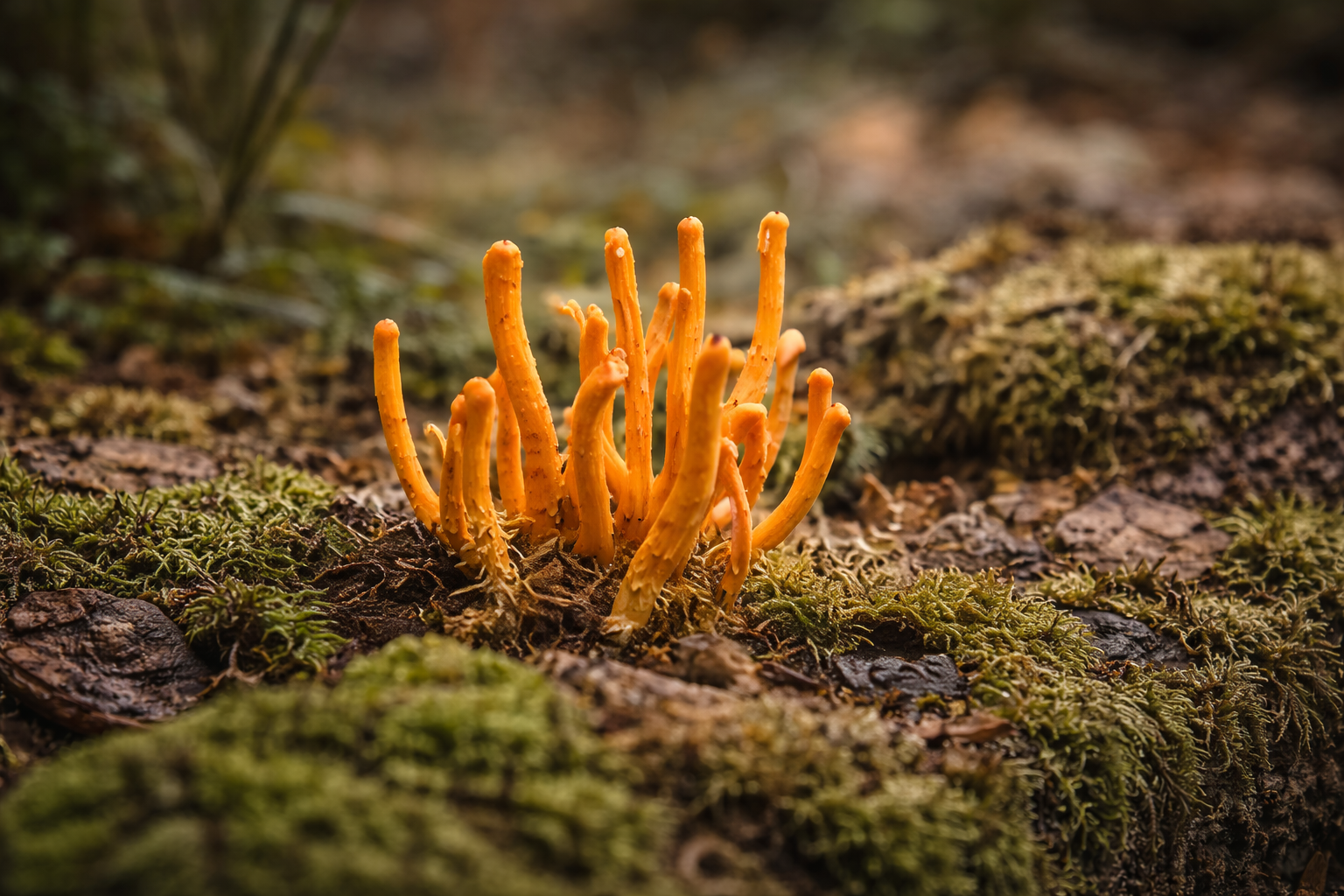
Cordyceps militaris and Ophiocordyceps sinensis
What is being Studied
Current research interest related to Cordyceps includes:
Nucleosides such as cordycepin and adenosine
Energy metabolism and mitochondrial-related pathways in non-clinical models
Exercise, fatigue, and respiratory-related research interest
Differences in compound expression based on cultivation substrate and environment
As with other medicinal mushrooms, findings vary depending on material source, preparation method, and study design.
Why Preparation Matters
Cordyceps differs from many other medicinal mushrooms in that its chemical profile is particularly sensitive to cultivation conditions and processing methods.
Substrate composition, fruiting environment, harvest timing, and extraction parameters all influence nucleoside content. Excessive heat, prolonged processing, or poorly documented extraction can reduce or alter key compounds.
For this reason, MMI emphasizes controlled cultivation, gentle preparation, and careful documentation when studying Cordyceps materials.
Cultivation & Material Transparency
Cordyceps refers to a group of parasitic fungi that have been used traditionally in East Asian medicine and are now studied for their unique nucleosides and secondary metabolites. Modern research and commercial use primarily involve Cordyceps militaris, while historical references often describe Ophiocordyceps sinensis.
At Medicinal Mycology Institute, Cordyceps is studied with particular attention to species identification, cultivation method, and preparation variables, as these factors strongly influence composition and interpretation of research findings.
Research & References
The following resources provide context for Cordyceps research:
Peer-reviewed studies indexed on PubMed
Reviews examining cordycepin and nucleoside pathways
Comparative studies of Cordyceps species and cultivation methods
Non-clinical models exploring metabolic and respiratory-related mechanisms
References are provided for educational purposes and to encourage independent review of the literature.
MMI Notes
Review of existing research and observational work conducted by the Institute suggests that commercial Cordyceps preparations often lack sufficient species and preparation detail to allow meaningful comparison with published studies.
This reinforces the importance of species clarity, cultivation transparency, and preparation documentation when interpreting research or evaluating claims related to Cordyceps.
MMI continues to document cultivation and extraction variables to better understand their impact on consistency and composition.
Related Institute Work
Standards & Methods
Research & Documentation
Supportive Access Programs
Cordyceps highlights how species identity and cultivation method are foundational to understanding medicinal mushroom research.
Much of the variability in Cordyceps research and commercial products arises from differences in cultivation approach. Fruiting body–based preparations, mycelium-derived materials, and fermentation products may differ substantially in composition.
MMI places particular importance on transparency around species, material type, and preparation method, as these factors are essential for reproducibility and meaningful comparison.
Species Considerations
Two species are most commonly discussed under the name “Cordyceps”:
Ophiocordyceps sinensis
Traditionally collected from high-altitude regions, this species is rare, difficult to cultivate, and largely unavailable outside of historical or ecological contexts.Cordyceps militaris
The species most commonly used in modern research and cultivation. It can be grown under controlled conditions and is the primary source of cordycepin and related compounds studied today.
These species are biologically distinct and should not be assumed to be interchangeable.
Overview